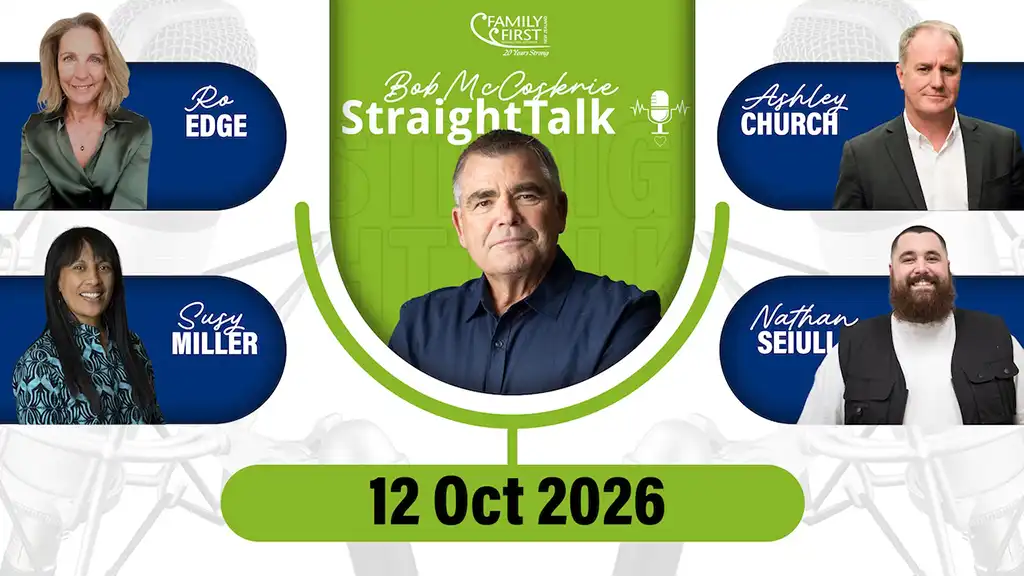
Here’s StraightTalk for 14 July 2025. In this episode, we discuss – according to the latest poll, NZ First is now the 3rd most popular party – is this because of their anti-woke campaigning which is connecting with voters? The Advertising Standards Authority has not upheld complaints against a Lotto advertisement that includes images of a man skiing naked with his backside visible. But the ASA recently banned an advert because they reckoned it suggested that young girls couldn’t do long maths. So whats the real definition of “offensive” these days? We ask the panelists. We discuss AI – artificial intelligence – and is it friend or foe – and can it really interpret speaking in tongues? And we ask the panelists what they’d like the COVID inquiry to achieve – if anything.
Show summary auto-generated by Descript app:
In this episode of Straight Talk:
- **New Zealand First Party’s Popularity**: The panel discusses the rise of New Zealand First as the third most popular party according to a recent Curia poll. They attribute this surge to the party’s anti-woke campaigning resonating with voters. They debate whether New Zealand First is the only remaining conservative party and reflect on leader Winston Peters’ past actions, particularly his stance on Israel and previous coalitions. Panellists express varying degrees of trust and scepticism towards Winston’s future actions and the party’s policies.
- **Advertising Standards Authority (ASA) Decisions**: The discussion shifts to the ASA’s controversial decisions, notably their refusal to uphold complaints against a Lotto advertisement featuring a man skiing naked. Conversely, they banned an ad for a school bag suggesting girls can’t do long division, sparking debate on what constitutes offensive content these days. Panellists express concerns about inconsistent standards, societal impacts, and the broader implications of such advertising.
- **Artificial Intelligence (AI)**: The panel evaluates the government’s new national AI strategy, examining the potential benefits and risks of AI. They discuss practical applications like summarising tasks, ethical considerations, and potential misuse, such as generating fake content. The discussion touches on AI’s role in education, healthcare, and even the church, weighing the balance between technological advancement and maintaining human interaction and discernment.
- **COVID-19 Inquiry**: The final topic centers on the new COVID-19 inquiry, with panelists debating its necessity and scope. They criticise past government actions during the pandemic, calling for accountability from leaders like Jacinda Ardern and Chris Hipkins. The discussion covers the impact on people’s lives, the need for genuine lessons learned, and scepticism about whether the inquiry will lead to meaningful change or simply generate more bureaucratic rhetoric. Panelists express frustration over the handling of the pandemic and the potential for this inquiry to bring about some form of accountability.