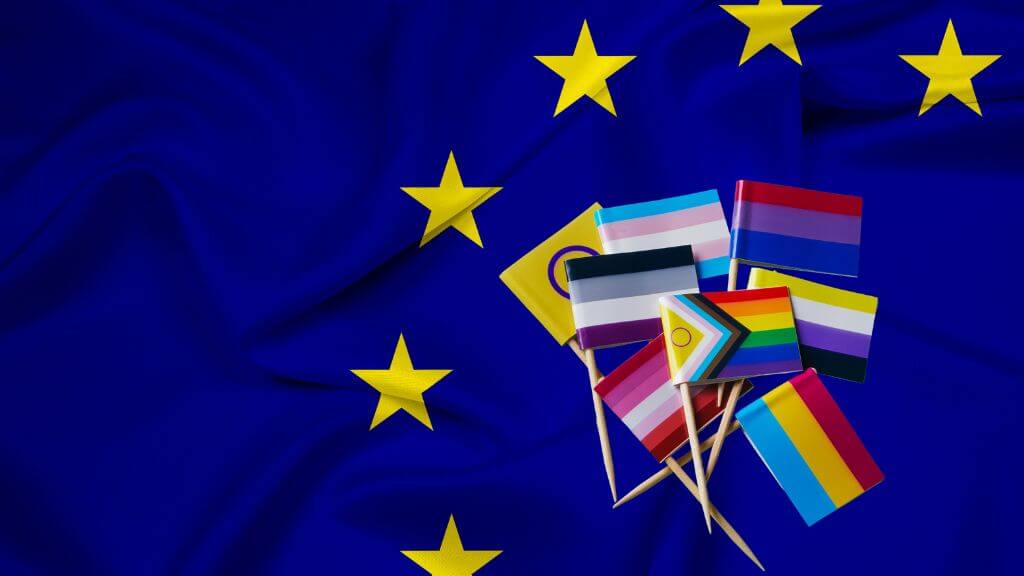
The European Union(EU) continues its gender ideology propaganda with the release of a draft of its LGBTIQ+ Equality Strategy 2026–2030 outlining measures to expand hate speech laws, ban conversion practices and further promote gender ideology. The draft strategy, adopted by the European Commission says children should be raised in “environments that celebrate diversity” and promises to “facilitate the exchange of best practices on safe and inclusive education” across member states. It argues that “children of rainbow families and LGBTIQ+ young people often face stigma and discrimination from an early age.”
The strategy includes an alarming proposal to allow legal gender recognition based on self-determination without age restrictions. I.e. toddlers could legally change their gender – no parental consent, no doctors, no red tape. If that isn’t troubling enough, one of the strategic goals’ is to ban conversion practices among EU member states. The strategy also calls for new measures to “combat conversion practices” through EU-funded studies and “structured dialogue,” claiming such interventions are “medically false” and cause “severe pain and suffering” with “long-lasting psychological and physical damage.” This would include a potential ban on exploratory/talking therapy with children dealing with gender distress.
To take things further, the strategy wants to broaden the EU’s hate-speech framework by adding “criminal law protection against offenses based on sexual orientation and/or gender identity” to existing laws covering race and sex. It calls for a standardization of what qualifies as “hate speech” particularly “hate offences” committed online across all 27 member states.
Whilst the strategy’s recommendations are non-binding, the European Commission regards itself as the guardian of the EU Treaties and will monitor how Member States comply with EU law and uphold EU values, including the principles set out in this strategy. The Commission has stated that it will use all tools at its disposal to protect EU values and is prepared to act where appropriate. In other words, the Commission could block EU funds from “discriminating regions” that refuse to fall in line with its values. In other words – it is a policy nudge with teeth.
The plan has drawn criticism from various groups who argue that removing age limits and medical checks could put vulnerable children at risk. There are concerns it could undermine sex‐based protections (i.e. policies based on biological sex rather than identity). Sex-based rights advocacy groups such as Sex Matters in the UK argue that gender activists have entrenched their ideology in European institutions with devastating consequences for vulnerable children and women. Its European equivalent, The Athena Forum noted women are being silenced in the EU and have recently released a report on how gender identity ideology has hijacked and transformed European law and policy.
Europe’s founding values include respect for human dignity and diversity — but also for truth, reason, and the protection of minors. A strategy that treats gender identity as a matter of simple self-declaration, even for children, blurs these principles. The EU should be promoting balanced, evidence-based policy — not pushing ideology into law.
**Written by Family First writers