
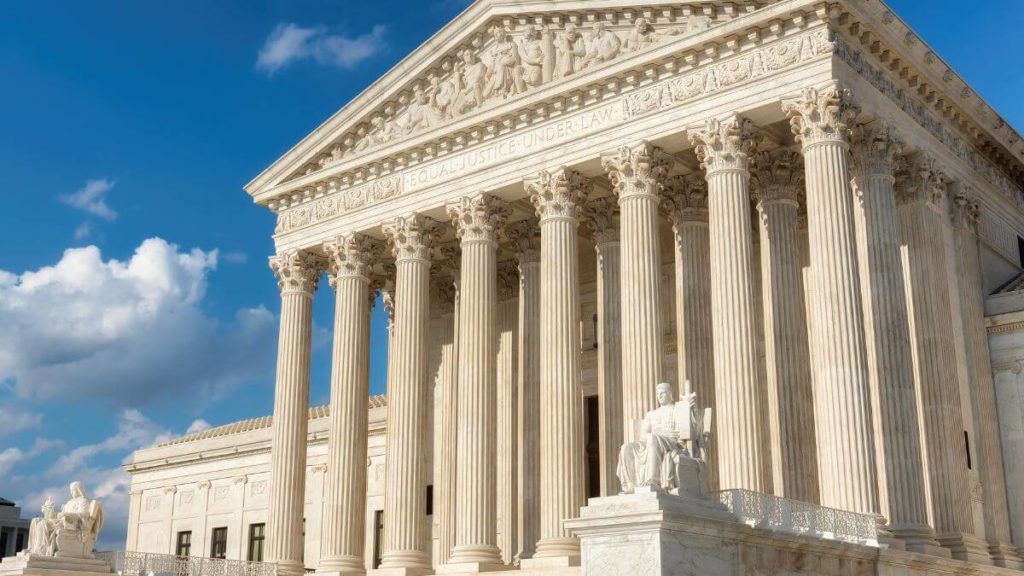
On June 30th, the US Supreme Court ruled that states can exclude transgender athletes from women’s and girls’ sports teams. The justices unanimously held that laws enacted by Idaho and West Virginia do not violate federal civil rights laws, but were divided over whether the West Virginia law violates the Constitution, at least as it applies to the athlete in the case before the court.
The decision in the consolidated cases West Virginia v. B.P.J. and Little v. Hecox effectively validates similar laws in 27 states. The Supreme Court ruling focuses on two laws that limit participation in women’s and girls’ teams. Idaho enacted the Fairness in Women’s Sports Act in 2020. The law bars transgender women and girls from participating on any women’s and girls’ sports teams in public schools, from elementary school through college. Idaho was the first state to pass such a law; since then, 25 other states have enacted similar bans. The West Virginia Legislature passed the state’s law, known as the Save Women’s Sports Act, in 2022. The law prohibits transgender women and girls from participating in women’s and girls’ sports teams at public secondary schools and colleges.
Tuesday’s ruling came in two parts. On the federal civil-rights question under Title IX, the Court was unanimous: all nine justices agreed that limiting teams by biological sex does not amount to unlawful sex discrimination. On the separate constitutional question, the Court divided 6–3, with the majority holding that the laws do not breach the Constitution’s equal-protection guarantee.
Writing for the majority, Justice Brett Kavanaugh’s 29-page opinion argued that the inherent physical differences between the sexes that affect athletic performance, the states’ legitimate interests in competitive fairness and athlete safety, and the conclusion that, when Title IX was enacted in the 1970s, “sex” was understood to mean biological sex because that was the ordinary meaning of the word when they were enacted in the 1970s. He noted that major sporting bodies like the NCAA, the US Olympic Committee, and the International Olympic Committee have drawn the same line. The Court accepted that the science around whether puberty blockers and hormones erase the male physical advantage remains genuinely disputed and that legislatures and sporting bodies, not judges, are the right people to weigh it.
Justice Sonia Sotomayor, in a dissenting opinion joined by Justices Elena Kagan and Ketanji Brown Jackson, argued that “the majority extends great sympathy to those it favours: the young cisgender girls and women who play sports. I share that sympathy. Playing sports can lead to benefits that are immeasurable, and many are understandably invested in ensuring that competition stays fair and safe. Because the majority, however, inflicts a hardship on those it disfavours without giving them the fair and full opportunity the Constitution requires to litigate their contentions, I respectfully dissent.” They argued that further fact-finding on whether athletes who never underwent male puberty hold a competitive advantage and would have returned the West Virginia case to the lower court.
Justice Clarence Thomas supported the Kavanaugh opinion but also wrote a separate concurring opinion. “Men and boys with gender dysphoria are not women or girls,” Thomas wrote, “even if they believe that they are. Sex is an immutable, ‘biological’ characteristic; it is binary; and ‘man’ and ‘woman,’ ‘boy’ and ‘girl,’ are the terms that correspond to adults and children of each sex. To use language to obscure reality—to show ‘indifference regarding the truth’—is to lie to the public and cease to treat our fellow citizens ‘as equals’.”