
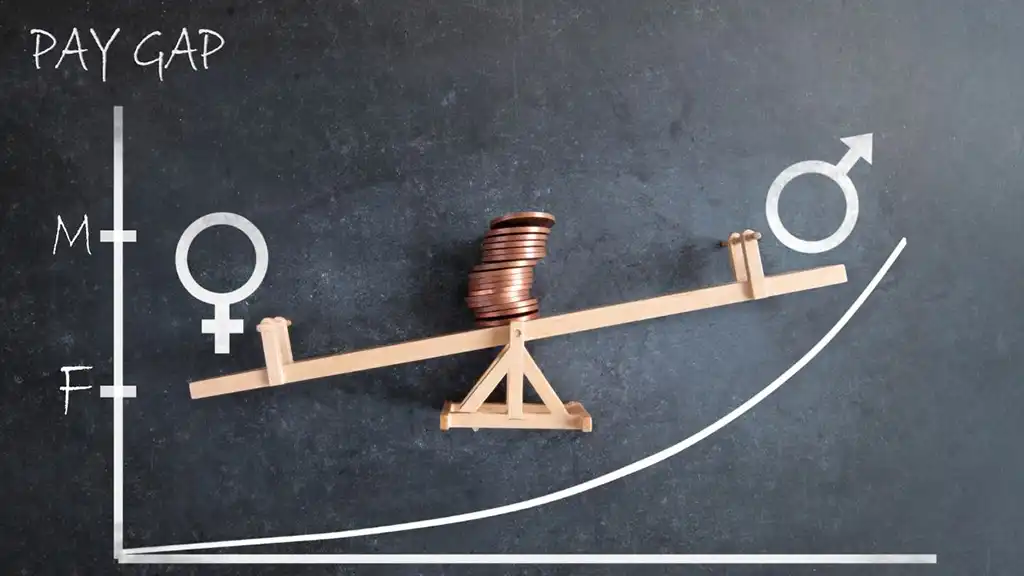
On many issues, it’s hard to discern where Labour and National differ. However, one issue highlights a real difference: the demand for pay equity. Labour supports it; see the Equal Pay Act Amendment 2020. National, at least for now, opposes it; see the Equal Pay Amendment Act 2025.
But first, to clarify, pay equity is not pay equality. Pay equality means the same pay for the same work. The demand for pay equity would determine an occupation’s relative value. This concern largely stems from the claim that work traditionally performed by women has been undervalued. The Ministry of Women argues that pay equity is the instrument to correct the historical undervaluation of female-dominated occupations.
Pay equity immediately runs into trouble because assessing an occupation’s value is difficult, if not impossible. In the contemporary workplace, market forces complicate evaluation. These include, at a minimum, supply and demand, the scarcity of particular skills, working hours, unpleasant or dangerous conditions, training costs, and the choices workers make when entering a specific occupation.
Who decides what kinds of work are worth doing? What exactly does ‘undervaluation’ mean?
Advocates of pay equity argue that, even though the market has valued occupations differently and continues to do so, socially comparable work should receive due remuneration. They call for a ‘proper’ evaluation of how market demand relates to the social valuation of work. They claim that the historical valuation of an occupation has been distorted because women have predominantly performed it.
It may not be obvious, but the demand for pay equity raises serious existential questions about the social and sexual dynamics between men and women, indeed about the entire human condition. Advocates claim it’s a human right. But is it really a simple matter of justice, or is something else at work?
The demand for pay equity is not grounded in the equality of men and women. Rather, it rests on the doctrine of functional equality: that men and women can and should fulfil the same societal role. This is a modern heresy. By that, I mean the doctrine of functional equality is a parasite feeding off the belief in male-female equality. It rejects tradition and lacks common-sense support. For a long time, civil society has depended on the belief in the complementarity of men and women, and that belief was fundamental to social order. For example, the evidence is overwhelming: the best way to raise children is with a loving mother and father. Mothers and fathers have distinct roles. Failing to recognise and practise that marriage is essential to social order increases the burden on the taxpayer through a burgeoning welfare system.
Pay equity, with its doctrine of employment valuation and the equity of sexual function, undermines the family’s confidence and its capacity to protect its children. It does so by insisting that women behave like men and enter the workforce as androgynous individuals. It assumes that individual identity matters more to society than family unity. It might look like women’s empowerment, but it is the opposite. It appears to encourage freedom of choice, but it actually loads the dice for men and women to compete in the workplace by insisting on their androgyny.
A practical economic question arises. How far can a job evaluation exercise establish that two occupations are of equal economic value when their market circumstances differ radically? “Equal value” is not the same as “equal market price”. Another significant factor is that pay equity demands more from the taxpayer.
According to the government’s own figures, 17 workforces had received pay equity corrections by May 2025, covering about 162,000 workers at an estimated ongoing cost of 1.78 billion a year. The nursing workforce alone accounted for about 30,000 of them. Most large settlements occurred in health, education, public service, or government-funded services. If Labour revived its 2020 legislation, Treasury says it would cost each New Zealand household $5,295 over 4 years. New Zealand taxpayers are being asked to pay for an ideology that undermines their own family life.
A question arises. How far may the state legitimately go in imposing its questionable conception of “distributive justice” before it begins to displace individuals’ freedom to make their own choices? Pay equality is entirely compatible with individual freedom. However, pay equity is not. When the state determines the relative value of different kinds of work, it enforces its own particular concept of distributive justice. That is likely to compromise economic freedom by reducing individuals’, employers’, and employees’ ability to determine remuneration through voluntary agreements.
Pay equity is not a human right; it does not increase women’s power to choose. Instead, it discourages women from working part-time and undermines the societal importance of family life. It gives the state the power to create the illusion of equality by declaring all occupations equally valuable. The consequences are obvious.
The demand for pay equity is a concealed link in the deracination of civilisation because it would cut us off from the roots of our culture, home, and tradition, the things we love. It contributes to the already advanced abolition of boundaries, so we no longer know what to love. It would erase the natural boundary between a man and a woman, promising a utopia where nobody judges anyone.