
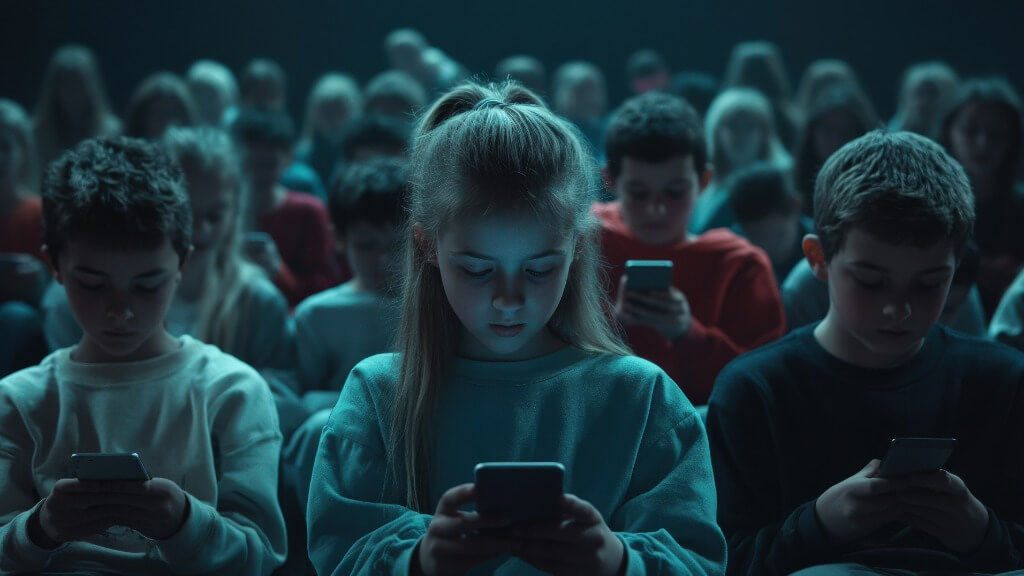
We used to worry about what our kids were watching on TV. Now, experts say the bigger risk isn’t just the content—it’s the ‘portal in their pocket’ that is fundamentally rewiring how their brains develop.
For years, parents, schools, teachers, policy makers and even politicians have debated whether phones and social media are harming young people. Now, we are beginning to see more data and objective evidence quantifying the harms of social media and even phone use and access on young minds.
Whilst the debate over smartphone use and access amongst adolescents has ramped up over the years, the science and data might have appeared to be lagging. That is because several caveats need to be considered when conducting research of this nature.
Part of the challenge is methodological, as researchers cannot assess phones like they do drugs in controlled trials with clearly defined exposures and outcomes.
Most research on teens and screens is observational, analysing large datasets to find links between digital habits and health. These studies cannot establish causation. However, over time, they can reveal consistent patterns that are difficult to overlook.
For years, even these efforts were limited by data: small sample sizes, short follow-ups, and uneven measures of screen behaviour. However, this is slowly changing as new research and data emerge.
What’s been discovered
- Across multiple studies, high levels of screen use are linked to measurable declines in cognitive performance – slower processing speed, reduced attention, and weaker memory.
- Rates of depression and anxiety climb steadily with heavier social media engagement.
- Sleep quality deteriorates as screens encroach later into the night, and researchers are finding troubling associations between screen habits and rising adolescent weight gain.
In a recently published journal article by University of Pennsylvania researcher Ran Barzilay, Smartphone Ownership, Age of Smartphone Acquisition, and Health Outcomes in Early Adolescence analysed more than 10,500 children across 21 United States sites found that those who received phones at age 12, compared with age 13, had a more than 60% higher risk of poor sleep and a more than 40% higher risk of obesity.
The study’s conclusions were similar to an extensive international study published in July 2025 in the Journal of Human Development and Capabilities, which found that receiving a smartphone before age 13 “is associated with poorer mind health outcomes in young adulthood, particularly among women, including suicidal thoughts, detachment from reality, poorer emotional regulation, and diminished self-worth”.
Barzilay stresses that he and his co-authors “are not against technology”, noting it offers many benefits. However, he warns that parents should seriously consider when to give a child a smartphone.
Other studies and journal publications, based on the latest data from the Adolescent Brain and Cognitive Development study, a National Institutes of Health initiative tracking almost 12,000 children born between 2005 and 2009, found that social media affects brain plasticity. The study’s authors noted that social media provides constant distractions, impairing a person’s ability to focus over time. Even “low users” (one hour a day) performed worse on cognitive tests than those with no use. High users showed measurable declines in oral reading, memory, and vocabulary. Lead author Jason Nagata likened the cognitive impact to a student’s grade dropping from an A to a B.
It is important to note that across these large-scale studies that are quantifying how smartphone access and heavy screen use can harm adolescent minds, one finding is clear and common: screens are taking a broader, deeper toll on young people than many expected.
The evidence is no longer “anecdotal” or “thin.” From increased obesity, impaired cognitive abilities, to the tragic rise in adolescent suicidal ideation, the data and emerging research confirm what many parents have felt in their gut for years: the “Great Rewiring” of our children’s lives is a direct threat to the traditional foundations of family and healthy human development.
For too long, parents have been told to “get with the times” or accept that constant digital intrusion is inevitable. But these studies remind us that parents—not tech companies or algorithms—are the primary guardians of their children’s wellbeing and development. We have a moral duty to protect the boundaries of childhood.
Absolutely, there are societal measures that can aid parents, such as legislative safeguards around age-verification for social media use to no phones in schools; however, there are also practical tools we can implement at home and in communities. This includes delaying smartphone access until at least age 14 (using a brick phone with basic functions), delaying social media access until 16, and removing screens from bedrooms and dinner tables. Our children need us to be parents, not peers. Setting firm limits on technology is an act of love that prioritizes their long-term soul and mind over short-term convenience.
We need to move from simply responding to the newest apps and technologies to actively promoting values that influence childhood development. Let’s restore childhood for our children by encouraging real-world play, face-to-face interactions, and allowing them to grow up without the incessant alerts and distractions of a digital world that never sleeps.
*Written by Family First staff writers*