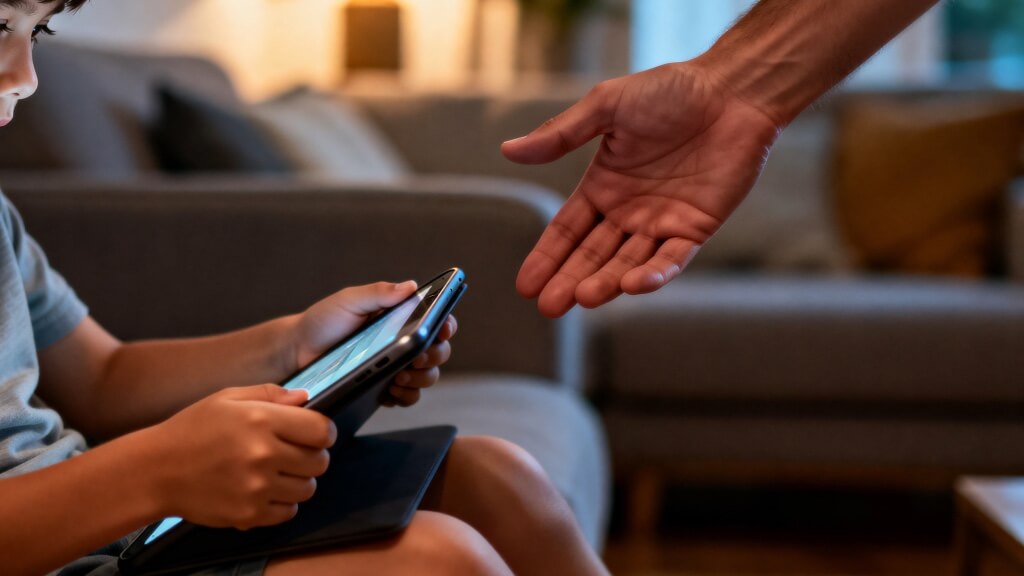

At Family First, we have long warned that the digital Wild West has exposed children to objectionable material that no responsible parent would allow in their home. Australia’s newly enforced Age-Restricted Material Codes marks a decisive step towards safeguarding young people from age-restricted material—a move New Zealand should follow.
On Monday (March 9th), Australia’s new codes came into force, requiring robust proof of age to access pornography, R18+ games, adult apps, and explicit AI chatbots. The regulations apply to any service accessible in Australia and carry penalties of up to A$49.5 million (approximately NZ$52 million) per breach. Registered under the Online Safety Act 2021, the codes apply to app stores, device manufacturers, social media platforms (that permit adult content), gaming services, and certain messaging platforms. Earlier codes for search engines, hosting providers, and internet carriers already limit pornographic or violent results for underage and logged-out users.
Family First commends Australia’s leadership on the issue of age-restricted content and its harms to children. These are measures we have long championed. Back in 2021, we called on the New Zealand government to adopt age verification measures to protect children from exposure to online pornography. In an August 2023 poll conducted by Curia Market Research, a resounding 79% of Kiwis supported such legislation, with only 11% opposed. Support was strong among both women (84%) and men (73%), and across political affiliations—proving this is not a partisan issue, but a moral and practical one.
For too long, the pornography industry has operated an inadequate system that offers no real safeguards. Australia’s approach replaces illusion with enforcement by introducing privacy-respecting technologies such as government-issued digital IDs, facial age estimation, credit card verification, or behavioural analysis. Australia’s eSafety notes that age restrictions for pornography should be no different from those for alcohol, cigarettes, or gambling: they are designed to protect minors from serious harm.
The evidence is undeniable. A study by the Australian online safety regulator found that about 10% of children have accidentally stumbled on porn online by the age of 10, increasing to almost 30% by 13. Research and government reviews—including the New Zealand Ministry of Health’s submission to the 2017 Select Committee on our petition—show that online porn has become increasingly extreme, violent, and degrading. Violence towards women appears in around 80% of content. Such exposure alters young people’s understanding of intimacy, often fostering addiction, desensitisation, and distorted attitudes towards consent and healthy relationships.
Unsurprisingly, some major adult content platforms have resisted, citing privacy concerns or technical burdens. But these are the same companies already conducting extensive data mining to monetise attention. The real invasion of privacy comes from leaving children unprotected while algorithms push harmful, violent, and degrading material into their feeds. Age verification isn’t censorship; it’s the digital equivalent of checking ID at the door.
New Zealand must not fall behind. Our government is currently reviewing content regulations and social media age restrictions (with a recent Parliamentary committee recommending age assurance for under-16s on social media, plus bans on nudify apps and non-consensual deepfakes). Now is the time to act decisively. Implementing an age-verification system for age-restricted content, based on Australia’s standards, would send a clear message: protecting children online is not optional; it’s a moral duty.
The digital age demands digital safeguards. Family First is urging the New Zealand government to move beyond circular discussions to action, ensuring that what’s unlawful for minors offline is also restricted online. Our children deserve the same protection and care. It’s time to prioritise child-focused policies and laws over adult interests and self-serving motives.
*Written by Family First staff writers*