
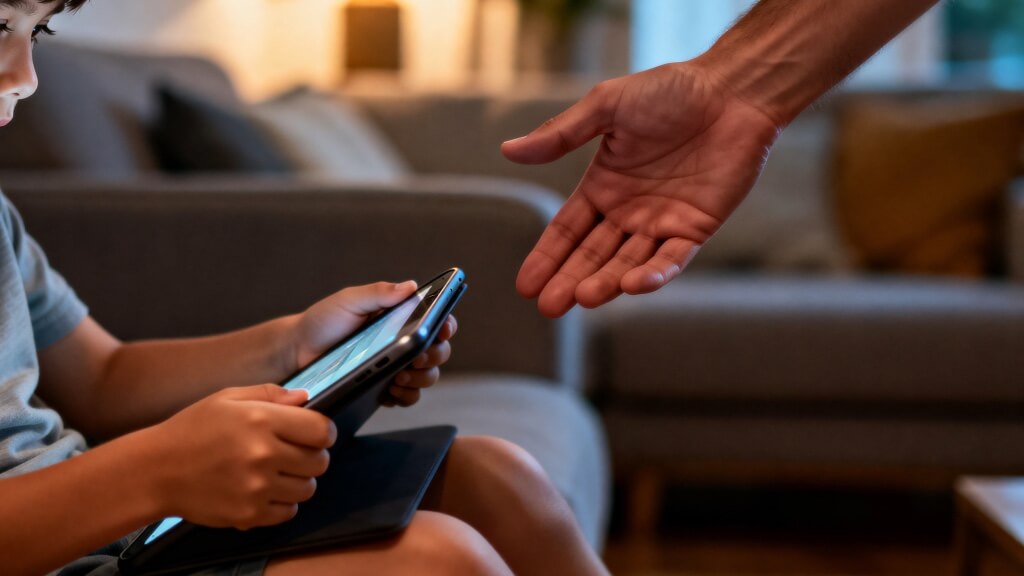
Screens are now part of almost every child’s life, and many parents worry about what they are doing to their children’s development and mental health. A major new review published in JAMA Pediatrics in September 2026 brings the evidence together. It draws on 23 earlier meta-analyses covering more than 2.8 million children and young people from 64 countries. Its message is measured but clear: more time on screens is linked with poorer outcomes in several important areas of children’s development and wellbeing.
The team, led by researchers at the University of Calgary, conducted an umbrella review, which is a review of reviews. Rather than running a new experiment, they gathered every eligible meta-analysis on screen time and child development published up to late 2025. They then went back to the individual studies within those reviews, removed any counted twice, and re-analysed the results on a common scale. The review was registered in advance, and two independent reviewers checked the work at the key stages. It looked at children aged 18 and under across four areas: school achievement, thinking and language skills, social and emotional development, and mental health.
The study’s findings
Children and teens who spent more time on screens tended to have:
- lower overall academic achievement
- weaker language skills
- more emotional problems and more difficulties with peers, the strongest links in the review
- more anxiety and depression symptoms (often called internalising problems)
- more behaviour problems, such as aggression and attention difficulties
Social media warrants particular attention. Greater social media use was associated with more depressive symptoms among young people. Smartphone and computer use showed stronger associations with anxiety and depression symptoms than television viewing or gaming.
Two other patterns stood out. In several areas, the links were stronger for older children and teenagers. They were also stronger in more recent studies, which the authors suggest may reflect how much more engaging, personalised and always-on today’s devices and apps have become.
Not everything was linked. The review found no clear connection between screen time and executive functioning (skills like planning and self-control), kindness and helping behaviour, or specific subjects like maths, reading and science.
What the study doesn’t say
It’s important to be honest about the limits of any research. Most of the studies were observational, so they show that screen time and these problems are associated, not that screens directly cause them. The relationship may work both ways: a child who is struggling might also turn to screens more. The links are consistent but modest, and results varied widely across studies. Screen time is one factor among many, alongside sleep, family life and friendships.
The review also measured how much time children spent on screens, not what they were doing. The authors note that some screen use, such as quality educational programmes or video calls with family, may actually benefit children. Even so, when the same pattern appears across millions of children, and is strongest among teenagers and in the newest studies, it is reasonable to act with care.
What this means for families
The researchers describe screen use as a “potentially modifiable” factor. In plain terms, families can change it, which is good news for parents.
A few practical steps flow naturally from the findings:
- Keep an eye on total screen time, especially as children move into their pre-teen and teenage years.
- Pay attention to social media and smartphones, where the links with low mood were strongest.
- Protect the basics, like sleep, outdoor play, family meals and face-to-face time with friends, which heavy screen use can crowd out.
- Choose content wisely. Shared, educational, or connecting screen time differs from hours of scrolling alone.
- Talk with your kids about how screens make them feel, rather than relying on rules alone.
The authors also say their findings should be read alongside other evidence linking screen time with obesity, physical inactivity and poor sleep. For parents, the takeaway is simple and hopeful. Families can shape screen use. Small, steady habits make a difference: screen-free mealtimes, devices out of bedrooms at night, more time outdoors and with friends, and regular conversations about what children are watching and how it makes them feel. No family will get it perfect, but the research suggests the effort is worth it.
Source: Al-Jbouri E, et al. Screen Use and Child and Adolescent Development and Mental Health Outcomes: A Quantitative Umbrella Review. JAMA Pediatrics, published online 28 September 2026. doi:10.1001/jamapediatrics.2026.4339